Wabi-Sabi Kitchen Ideas
See what a wabi-sabi kitchen looks like — textured plaster, handmade ceramics, muted earthy tones — restyled from your own photo with AI.
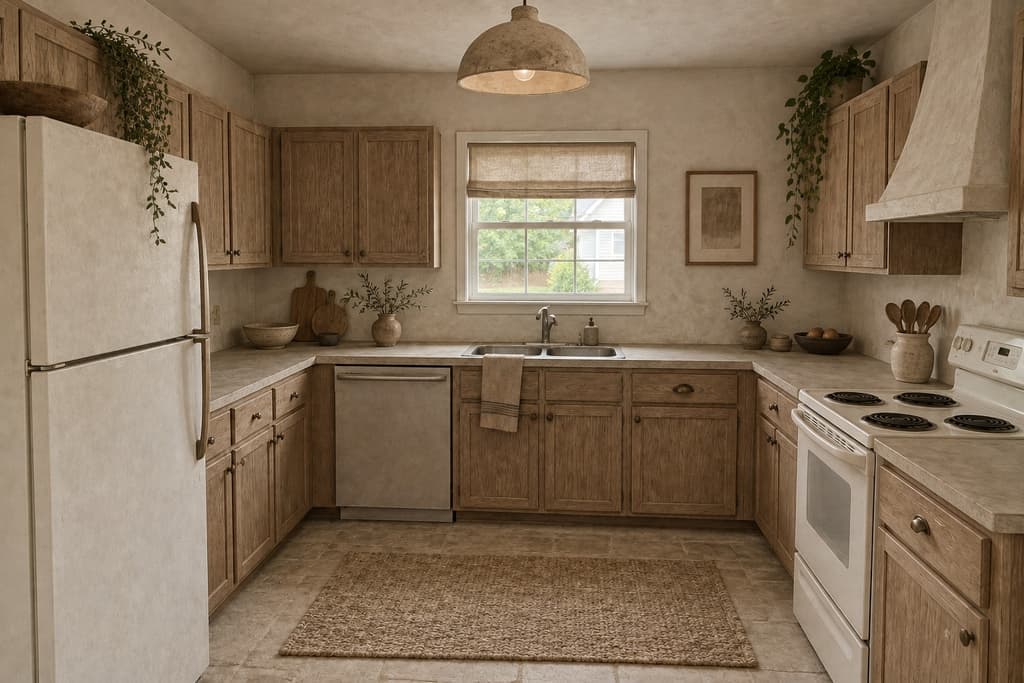
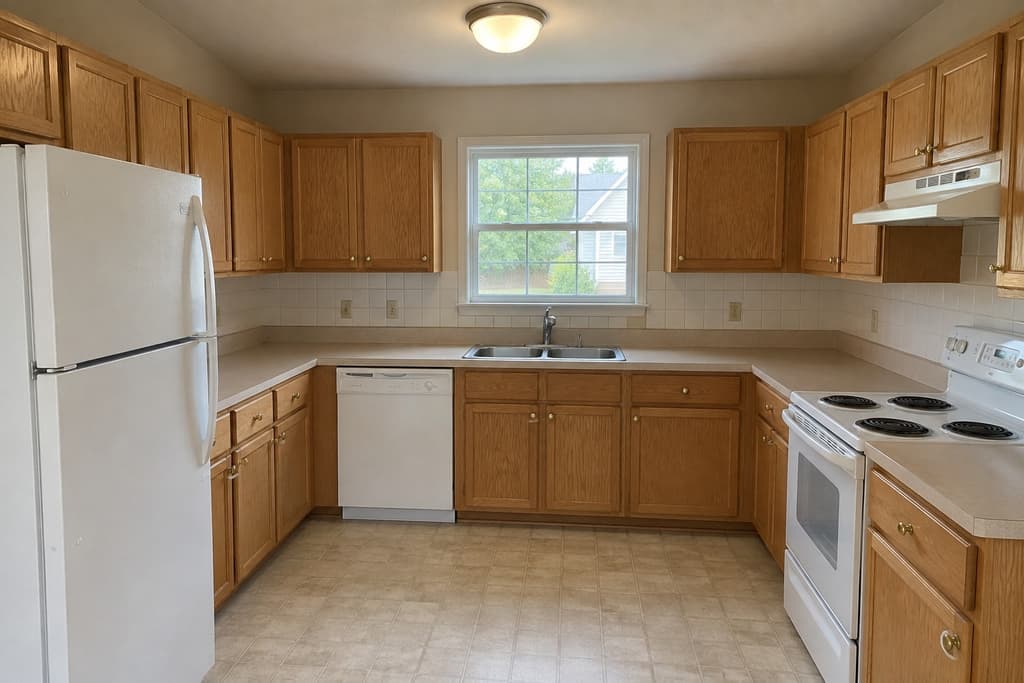
A sample kitchen restyled in Wabi-Sabi. The room is AI-generated for this page, not a customer photo; your own room gets the same restyle.
A wabi-sabi kitchen leaves the polish behind: textured plaster walls, handmade ceramics on open shelves, and counters left honest about their material.
What a wabi-sabi kitchen looks like
Cabinet fronts in raw or lightly finished wood, or a plaster-textured paint finish, paired with open shelving that displays a small, handmade collection of ceramics rather than a matched set. Counters go honed stone or a raw, unpolished material with visible texture, and hardware stays minimal — a simple leather pull or an unlacquered metal knob that will patina over time. The palette holds to clay, sand, and charcoal throughout, and the room stays uncluttered, with negative space left intentionally.
Try it on your own kitchen
Upload a photo of your kitchen and restyle it in Wabi-Sabi — cabinet fronts, counters, shelving, and hardware change to match; cabinet-box locations, appliance openings, and the window over the sink stay exactly as they are. Then step inside a 360° walkthrough before deciding.
Details worth getting right
- Textured plaster or raw wood cabinet fronts are the room's foundation — a glossy, uniform finish loses the intentional imperfection.
- A small, handmade collection of ceramics on open shelves reads truer than a matched, mass-produced set.
- Honed, unpolished stone counters with visible texture beat anything glossy or flawless.
- The room should stay uncluttered — empty counter space is part of the design, not a placeholder.