Wabi-Sabi Living Room Ideas
See what a wabi-sabi living room looks like — textured plaster, raw linen seating, muted earthy neutrals — restyled from your own photo with AI.
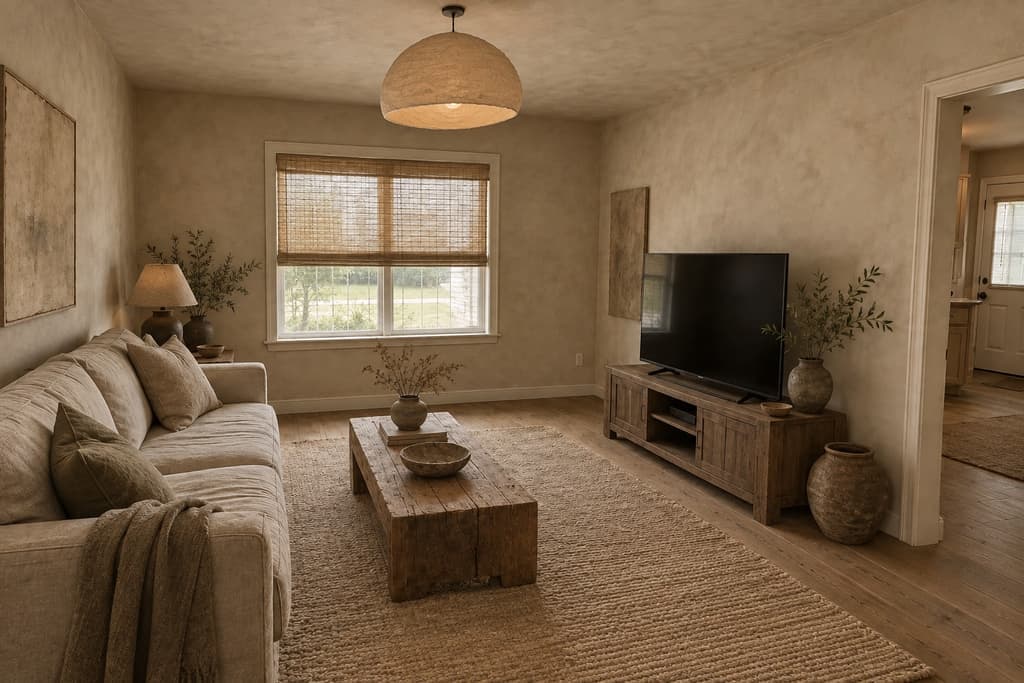
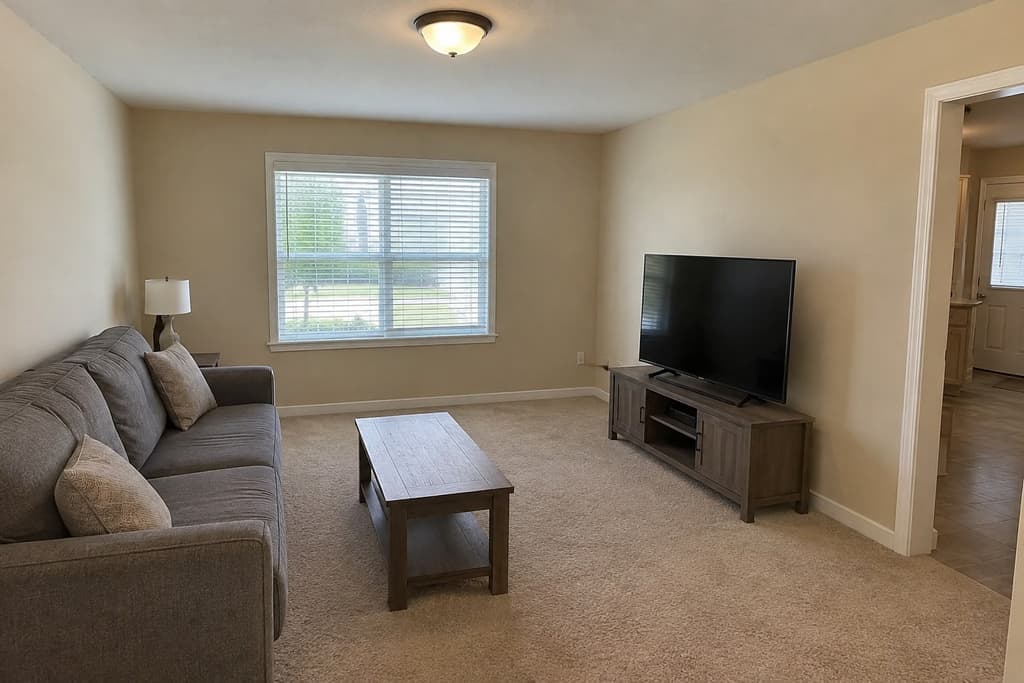
A sample living room restyled in Wabi-Sabi. The room is AI-generated for this page, not a customer photo; your own room gets the same restyle.
A wabi-sabi living room stays quiet and uncluttered: textured plaster walls, raw linen seating, and a palette that never reaches for shine.
What a wabi-sabi living room looks like
Seating in raw linen or a nubby natural fabric, in muted clay or sand tones, with a low, simple silhouette rather than anything sculptural or ornate. Walls carry a textured plaster finish, and the coffee table is a single raw wood slab or an asymmetric stone piece, left with its natural edges. A handmade ceramic vessel or a single dried branch stands in for a styled centerpiece, and the room stays deliberately uncluttered, with negative space treated as part of the composition.
Try it on your own living room
Upload a photo of your living room and restyle it in Wabi-Sabi — seating, walls, tables, and accents change to match; your window placement, doorways, and room layout stay exactly as they are. Then step inside a 360° walkthrough before deciding.
Details worth getting right
- Raw, textured plaster walls are the room's foundation — smooth, flat paint loses the intentional imperfection.
- An asymmetric or raw-edged coffee table reads truer than a perfectly symmetrical, polished piece.
- Muted earthy neutrals should stay quiet throughout — nothing bright or glossy belongs in this room.
- Deliberate emptiness (a bare corner, an unstyled shelf) is part of the design, not something to fill in.